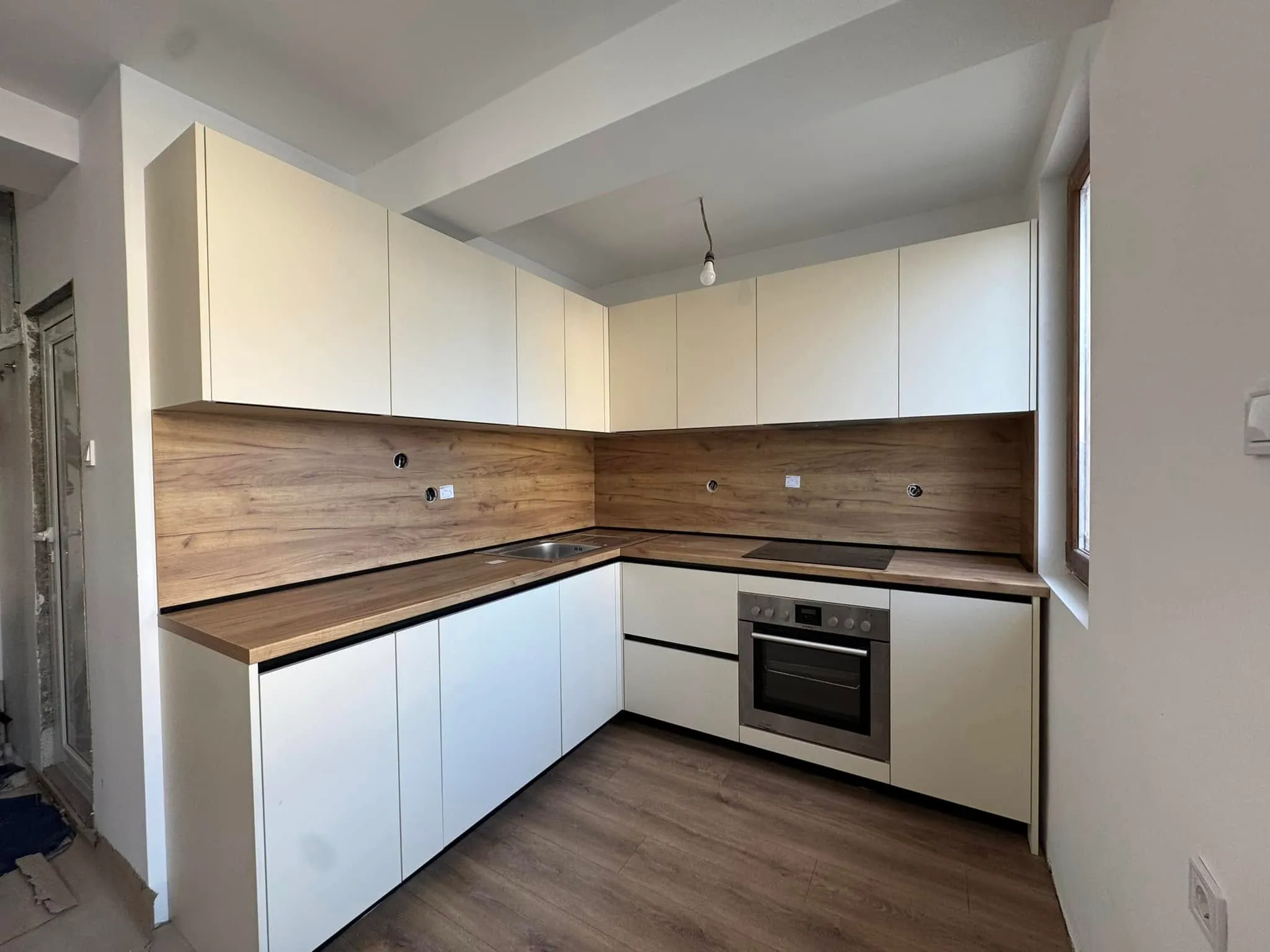
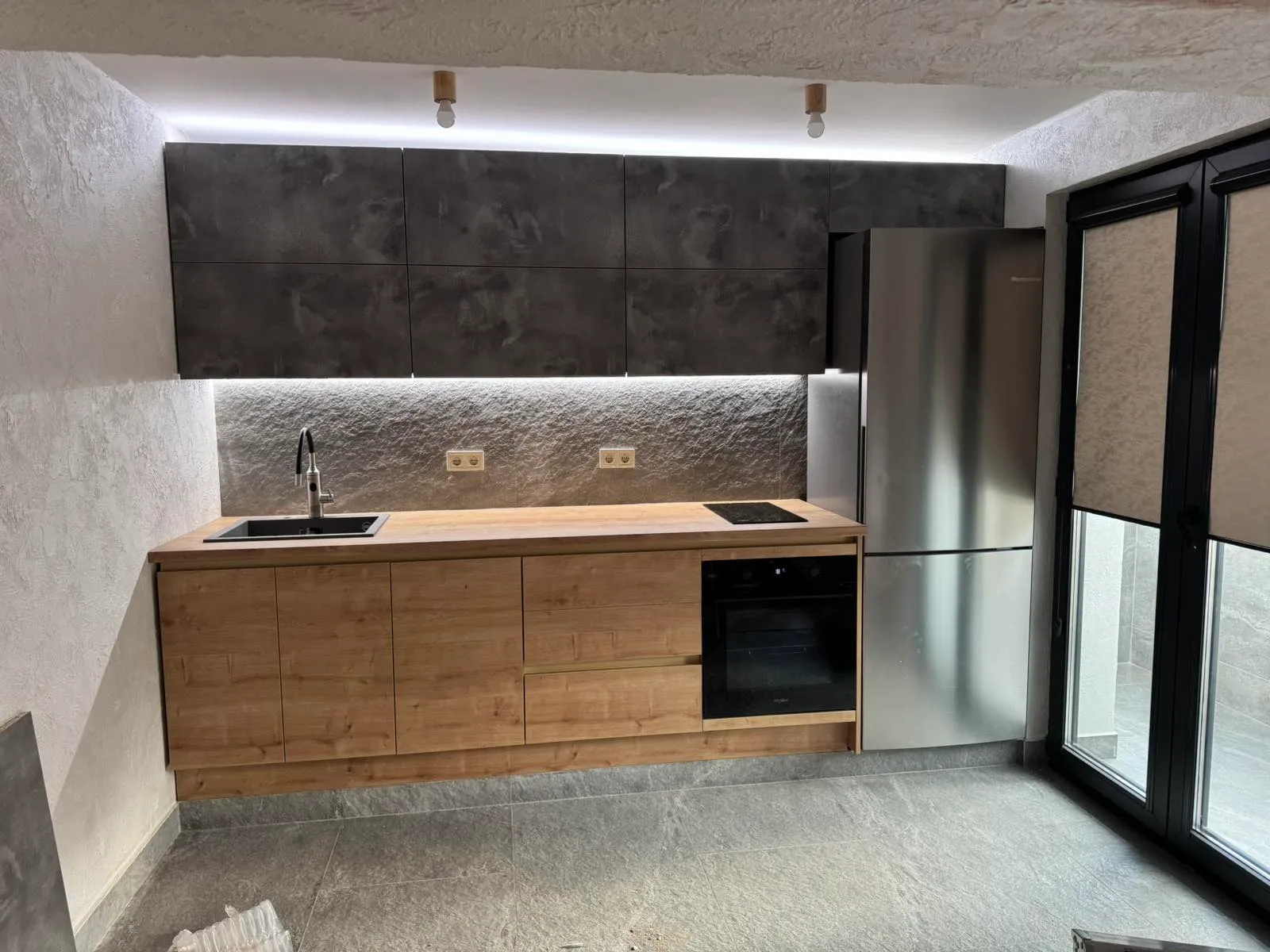
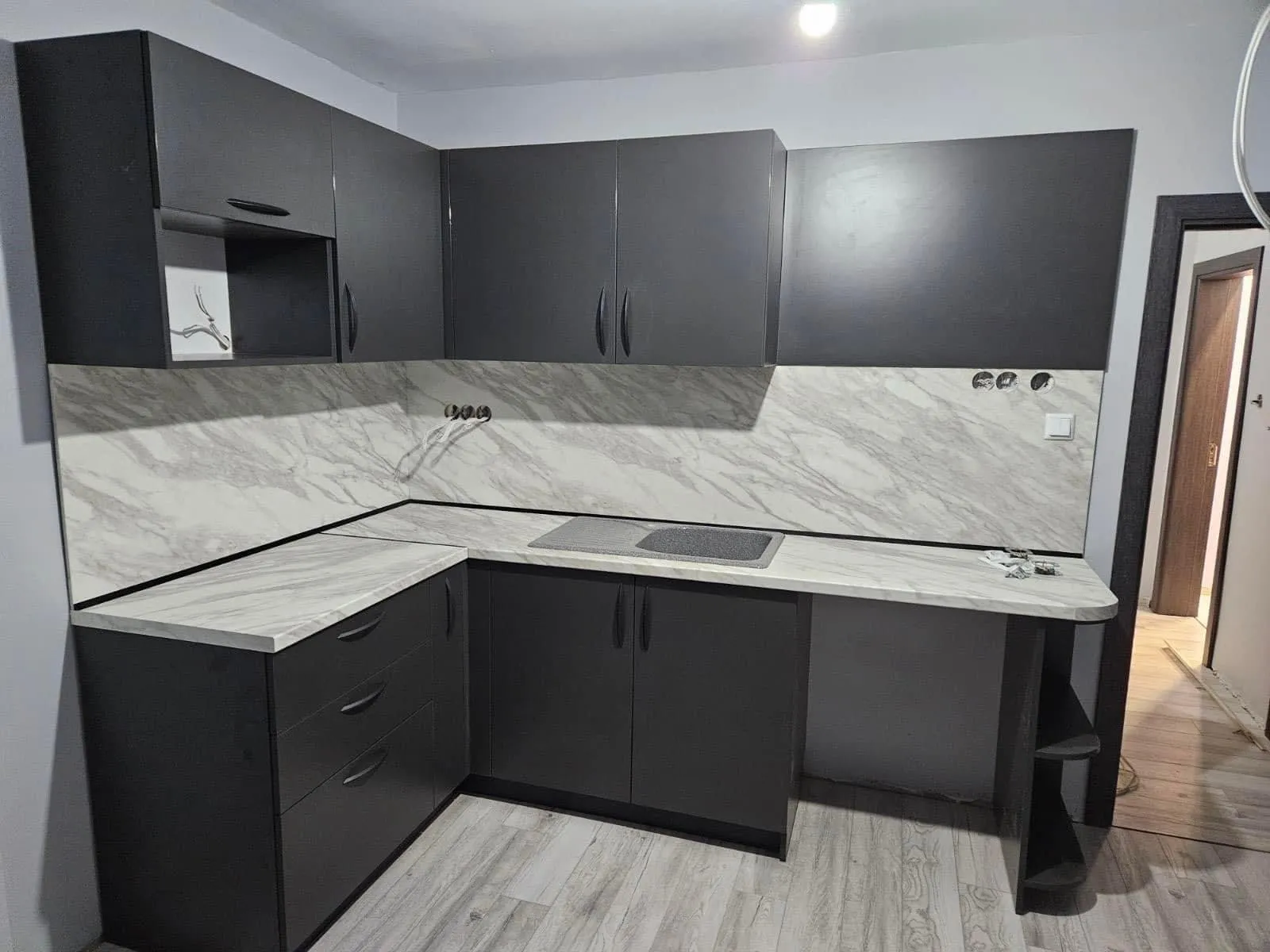
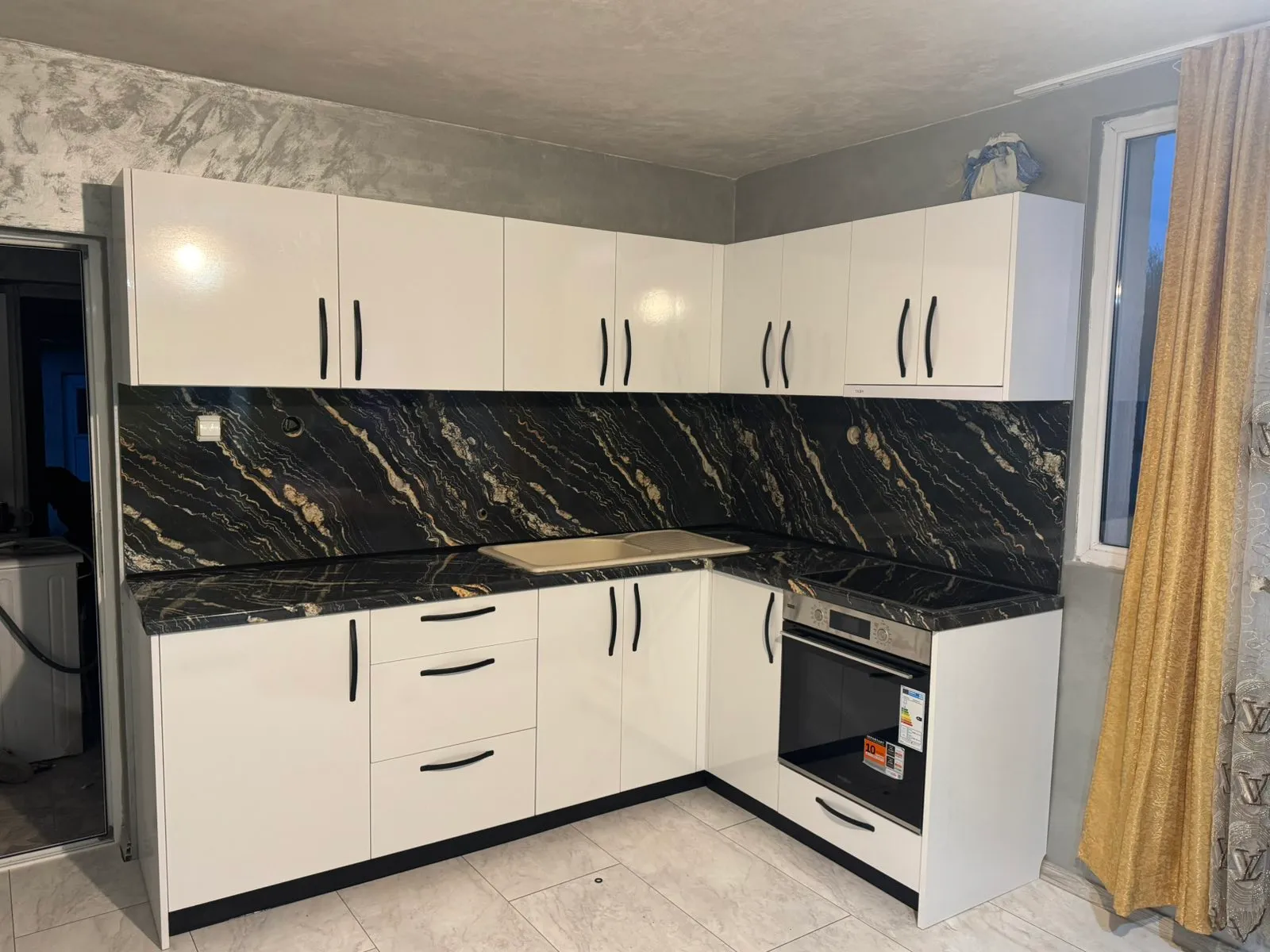
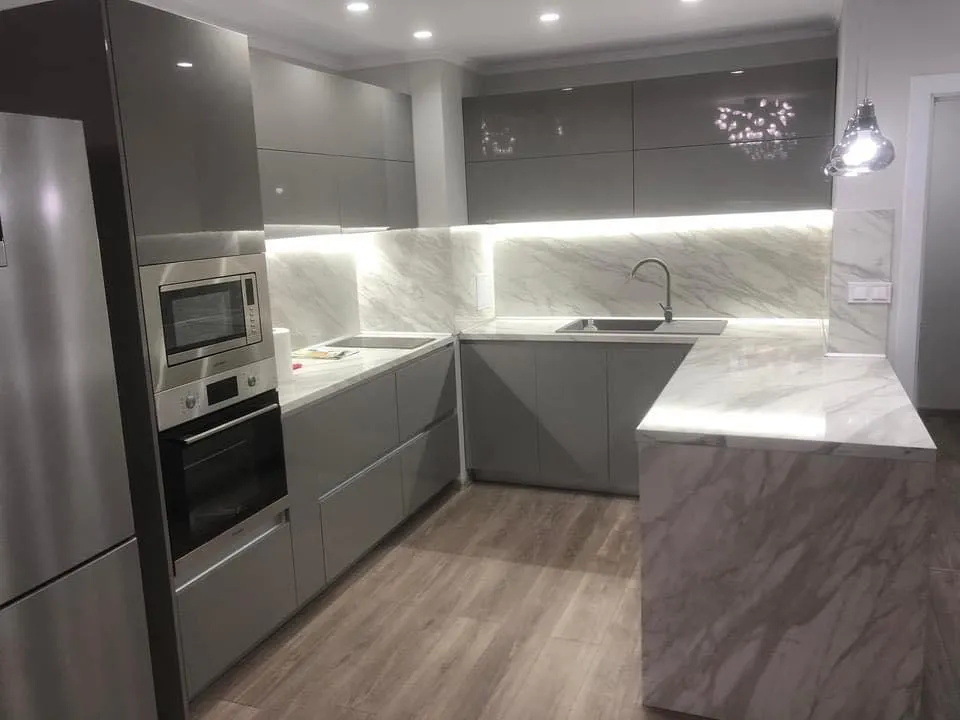
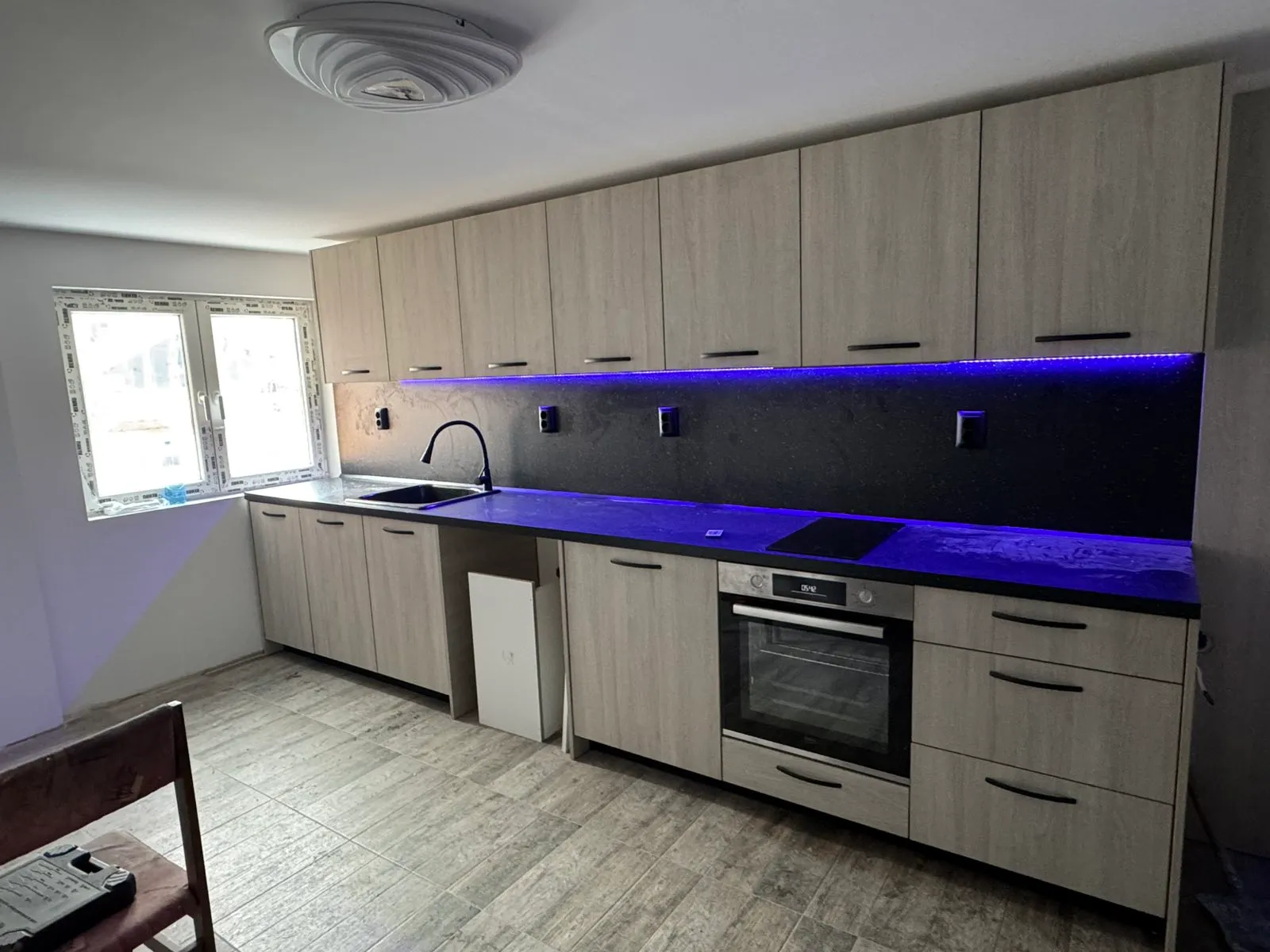
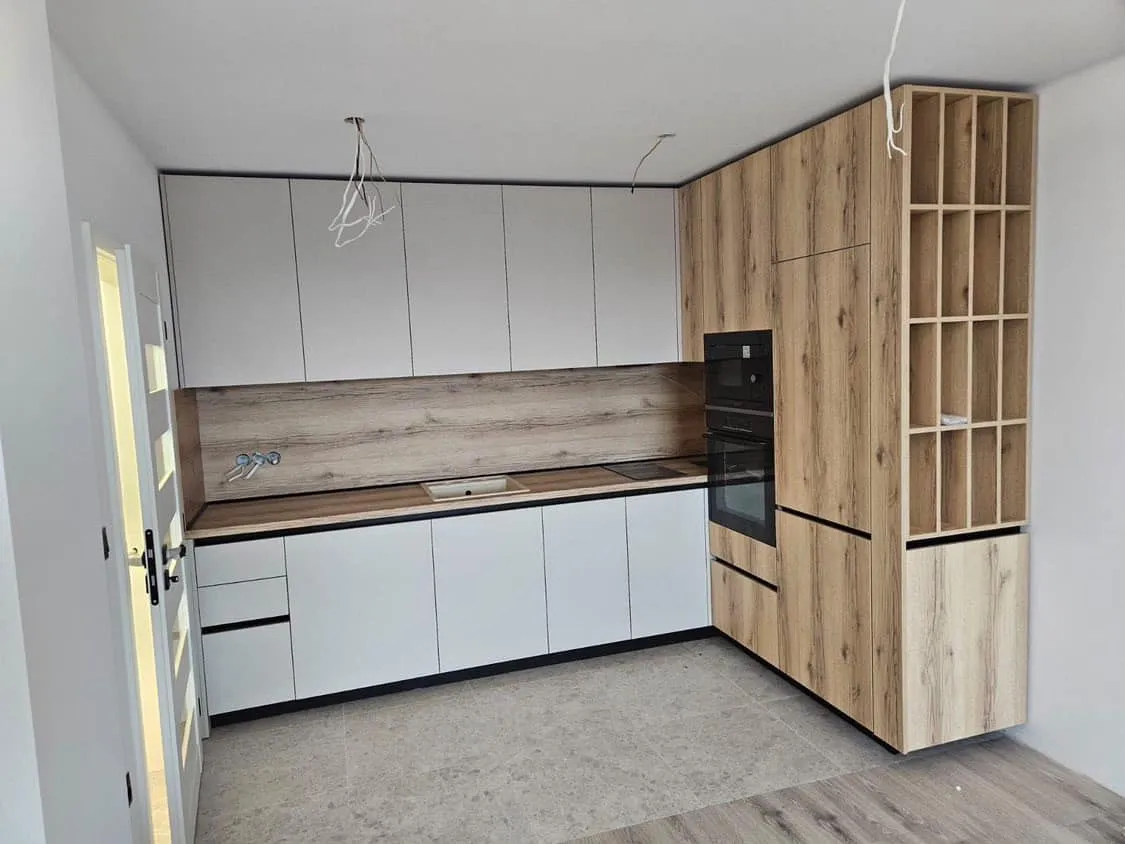
The price of a custom kitchen is determined by a few things. If you know what they are, you can decide consciously where to invest and where to save.
1. Size and layout
The more linear metres, the higher the price — that much is obvious. Less obvious is that the layout matters too: corner and U-shaped kitchens have corner units that need special mechanisms to be fully usable. An island adds a separate module with a worktop on all sides.
2. The fronts (doors and drawer fronts)
The fronts are what you see every day, and they are one of the biggest items in the price. Laminate fronts are the most affordable and very durable. Matt MDF fronts are in the middle — smooth, with no visible edging, in almost any colour. Gloss MDF and veneer are at the top end. The price difference between the cheapest and the most expensive front for the same kitchen can be significant.
3. The worktop
A laminate worktop is the most affordable and practical. Quartz, granite and engineered stone cost more, but they are much more resistant to heat, scratches and stains and look different. A stone worktop is priced separately and you see it as a separate line in the quote.
4. Hardware and mechanisms
Hinges, drawer runners and corner mechanisms determine how long the kitchen will work like new. We use Austrian Blum hardware with a lifetime guarantee and proven German hardware. Drawers cost more than cupboards with doors, but they are much more convenient — so we often recommend them for the base units.
5. Tall appliance units and units up to the ceiling
Tall units for the oven, microwave and fridge and wall units up to the ceiling add storage, but also material. It is often a good investment, especially in smaller kitchens.
6. Lighting and details
LED lighting under the wall units, display cabinets, handles, open shelves, non-standard angles and sloping ceilings — everything has a price, but everything can be solved in different ways within the budget.